Video and animation have become essential tools for how businesses communicate and market themselves. Audiences favor interactive, visually engaging content, making motion-based media preferable over many static formats. Video content now seems to appear everywhere, from simple logo animations and explainer videos, to commercials and entertainment. It helps communicate complex ideas clearly through visual storytelling, supporting a wide range of industries such as financial and legal services, education and more.
Where It All Began
Animation has a long history that predates modern marketing by decades. Early forms like flip books and sequential drawings in the late 19th century introduced the illusion of motion. By the early 1900s, businesses began using hand-drawn animation in commercials to capture attention in new ways. Content of movement and storytelling helped brands stand out in print-heavy environments. Over time, motion became closely tied to advertising and brand communication.
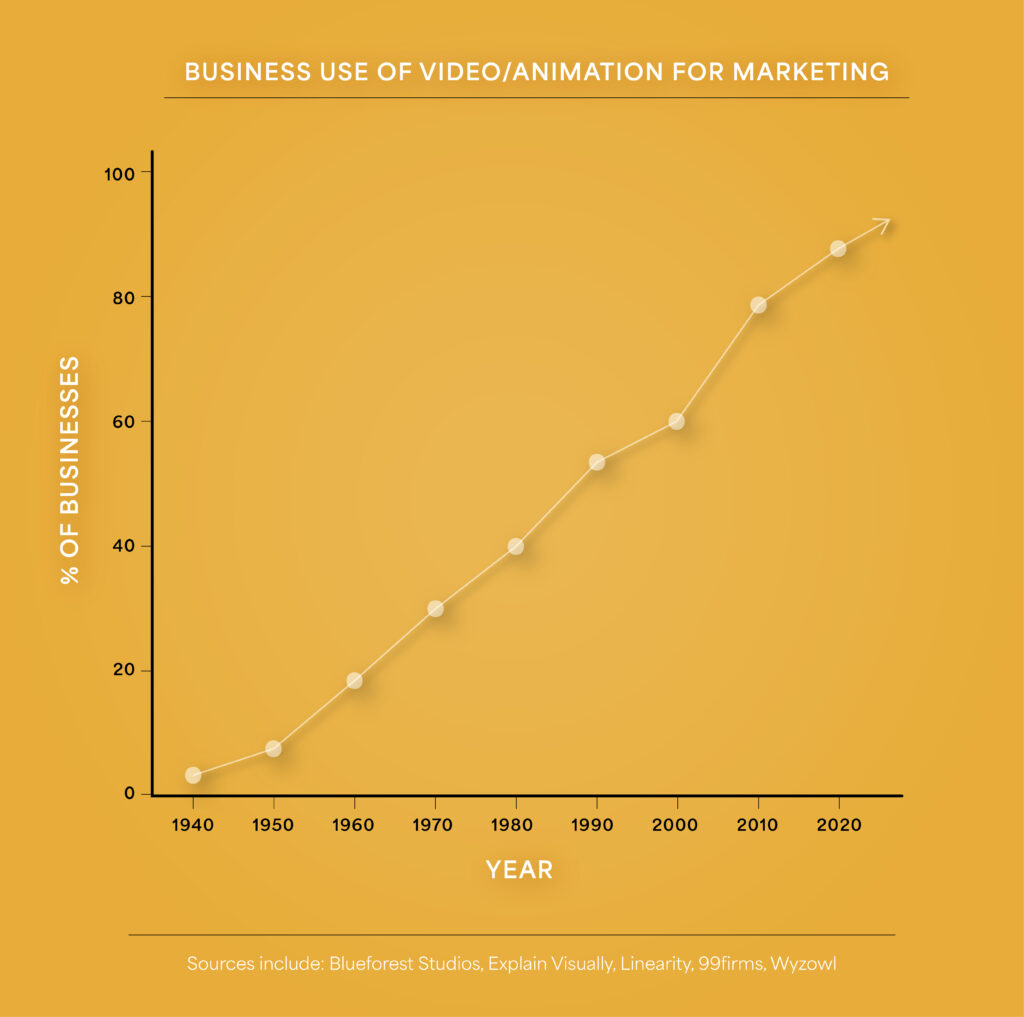
The transformation of marketing through television began in the 1940s, with the first appearances of TV commercials. In the decades that followed, businesses adopted video for training and promotional aspects. Digital editing in the 1990s lowered costs and made video more accessible, while platforms like YouTube opened the door to viral marketing in the mid-2000s.
Social media and smartphones made video part of everyday life, driving the rise of short-form content. By the late 2010s, video became the core of most marketing strategies. Today, AI tools and interactive formats continue to shape how businesses use animation and video to connect with audiences.
The Crucial Role of Video & Animation
Video and animation have grown in popularity as advances in technology and changing habits have pushed audiences toward content that is quick and visually engaging. Animation adds movement and personality that help messages feel more engaging and memorable. As attention spans shorten, these formats also hold interest more effectively than text or static images, making short-form video a common way to consume information.
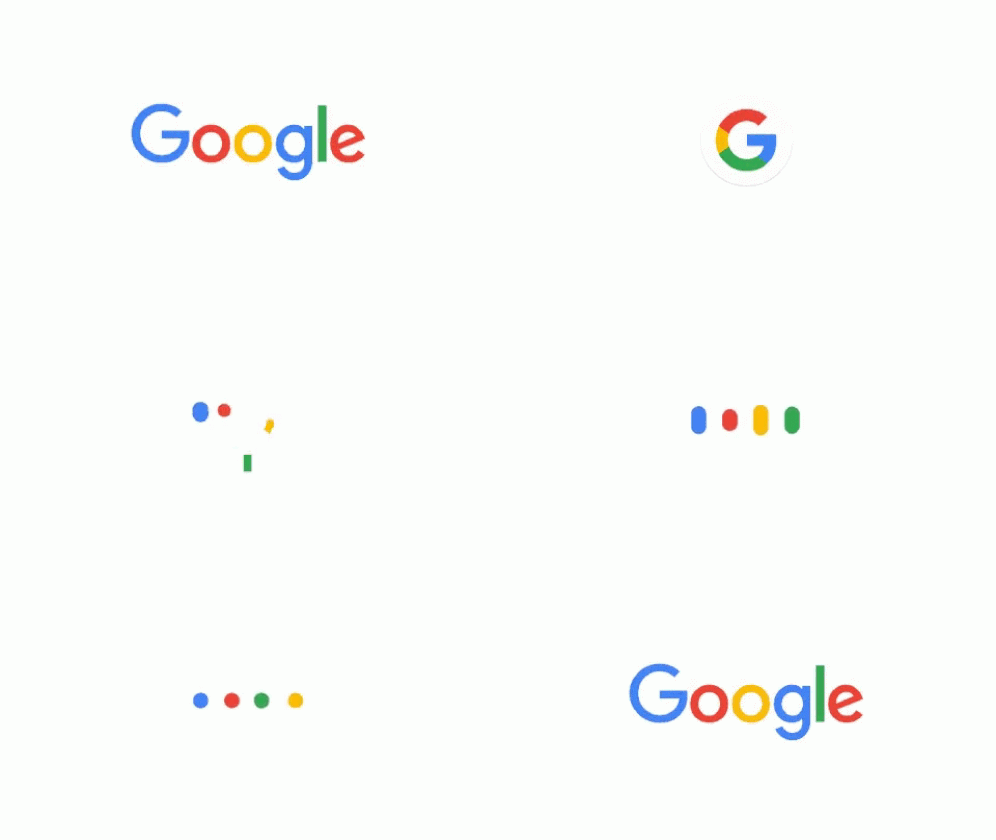
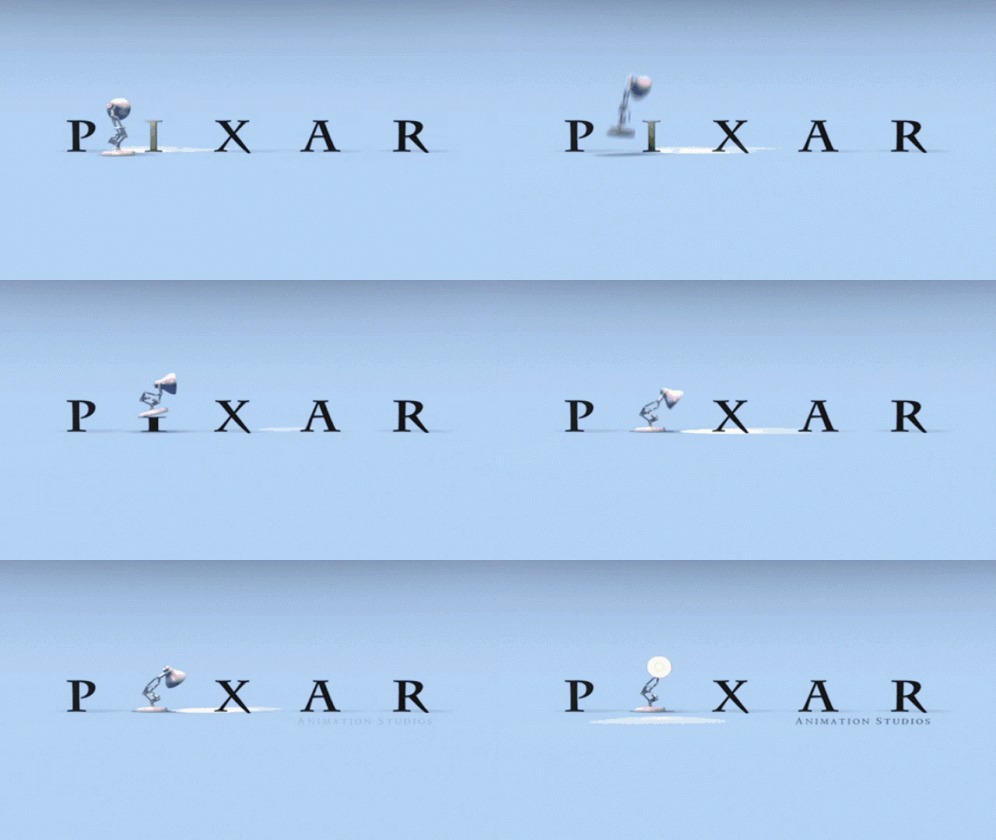
For marketing, motion-based content strengthens storytelling and audience connection. It can express emotion, explain complex ideas and communicate personality in a short amount of time. In an attention-driven environment, visuals that move stand out more easily. Even branding elements like animated logos benefit from motion, as the human brain responds more quickly to movement than static imagery. Many brands use this to their advantage, including Netflix, Google, Pixar and so many more. Together, these qualities make video and animation effective tools for gaining attention and building recognition.


The Concern
The growth of video and animation raises questions about trust and accuracy. AI-generated content and deepfakes make it hard to verify what is real, while algorithms often reinforce familiar viewpoints and limit exposure to different ideas. Along with limited exposure, visual storytelling can be highly persuasive, which increases the risk of influence that feels more manipulative than informative. Then there is also the concern with attention spans as constant exposure to fast-moving content can also weaken focus on long-form reading, while short reward cycles encourage habitual scrolling.
The Impact
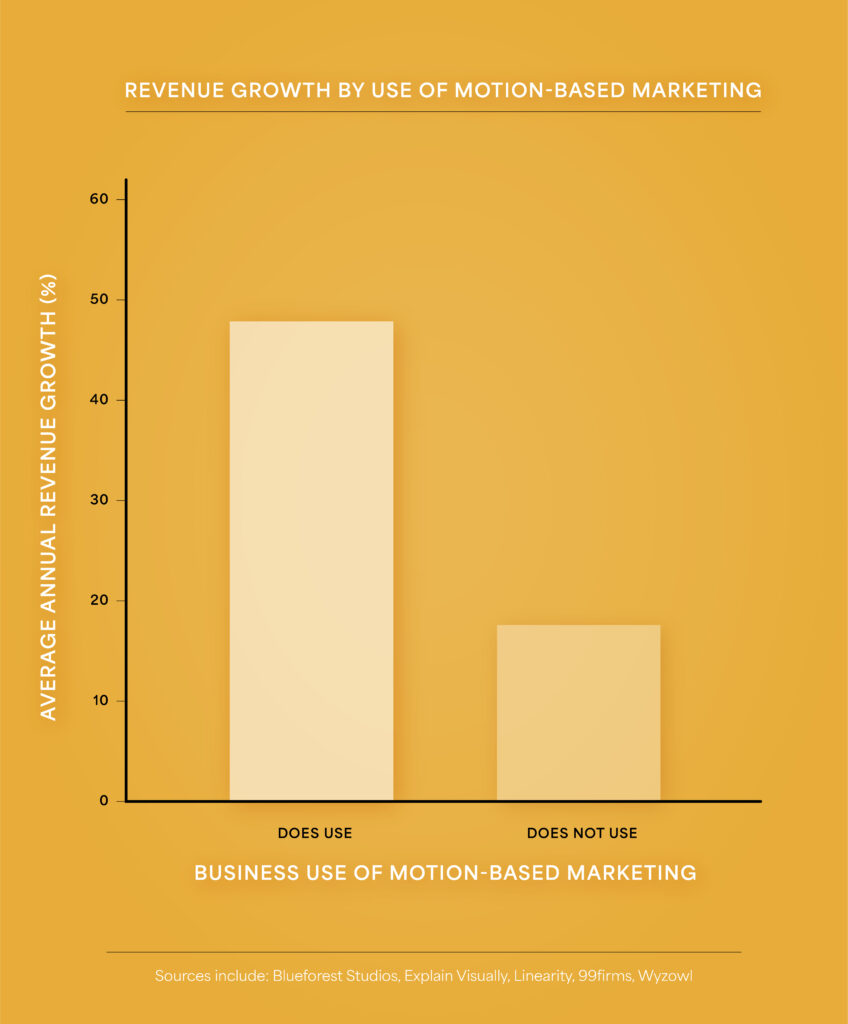
Nearly nine out of ten companies now rely on video as part of their marketing strategy, up from about six out of ten in 2017 according to various sources including MarketSplash. Marketers continue to connect revenue growth to video content. Engagement data supports this, as motion-based design shows interaction rates that are more than 150 percent higher than static content as stated by Single Grain. These patterns reflect a shift in how brands compete for attention and communicate value.
Most consumers say video quality shapes how they view a brand, and many organizations intend to expand their video efforts. Together, these trends show that video and animation are no longer optional additions, but core elements of modern marketing.
Put Your Brand in Motion
Neuger can work closely with your team to create unique assets to grab the attention of your target audience. Get in touch with us, we’d love to talk more about how your brand can benefit.